

Americas Markets - Market Trends
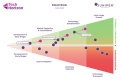
Juniper Research, identifies the three ‘Major Movers’ for roaming in 2025; ranked by their anticipated increase in market performance over the next 12 months in the launch of the Roaming Tech Horizon report.
Parks Associates recently surveyed more than 100 executives across the connected home and consumer IoT landscape to better understand their view of the market, changes in their business strategies, key metrics for success, and top challenges facing the market. The research, found in The Business of Consumer IoT: Product Strategy in a Maturing Market, reveals consumer IoT products are priced 21-70% higher than similar non-connected products, with an average price differential of 44%.
Novaspace, the leading space consulting and market intelligence firm, has released the 13th edition of its Prospects for Maritime Satellite Communications report, assessing the key trends and developments impacting this rapidly growing market.

The World Teleport Association (WTA) today released From Teleport to Network Service Provider: The Search for Tomorrow’s Business Model, a new research report that examines how teleport operators are shifting from providing traditional uplink and downlink services to managed network services and the drivers, enablers, challenges and opportunities presented by that shift. The report is sponsored by Kratos.
Mobile Experts released a new report today, illustrating the economic rationale for mobile operators to use Satellite Direct-to-Device services instead of building additional rural towers. In this new report, the satellite constellations are explained in detail, with thoughtful analysis that illustrates how the business models will evolve to serve consumer and enterprise customers in hard-to-reach areas.
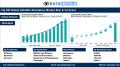
According to DataIntelo, the satellite simulators market size is poised for significant growth, projected to escalate from USD 1.2 billion in 2023 to an estimated USD 2.3 billion by 2032, reflecting a robust compound annual growth rate (CAGR) of 7.5% during the forecast period. This expansion is primarily fueled by the increasing adoption of satellite simulators in various sectors such as military, telecommunications, and research, driven by the rising demand for satellite technology in numerous applications.

Investment in geospatial technologies continues to grow at a rapid pace. According to NovaSpace, an estimated 5,401 earth observation satellites will be launched between 2024 and 2033. This is a 190% increase from the 1,864 satellites launched in the previous decade. This growth is being fueled by technological innovation and increased demand. As climate change, migration, urbanization and conflicts increase, the need for timely and precise geospatial information continues to grow.
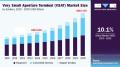
According to Novaspace, in 2022 there were 5.6 million commercial Very Small Aperture Terminals (VSATs) in use around the world. Novaspace is forecasting a 2.3x growth rate in this number to 2032, meaning there will be 12.88 million commercial VSATs in use that year. It is also forecasting a cumulative market value for the entire ground system (i.e. not just VSATs) of US$ 80 billion between 2023 and 2032. As technology onboard satellites advances providing greater and greater throughputs, so ground technology has advanced and improved in order to handle far greater speeds and capacities. IPStar launched in 2005, is generally considered to be the first high throughput satellite, its capacity was 45 gigabits per second (Gbps).
According to a new analysis from Novaspace, SpaceX generated an estimated $11.8 billion in revenue in 2024, with Starlink overtaking its space transportation division for the first time. The company’s long-awaited profitability milestone is being driven by the steady maturation of its connectivity business and a launch model now optimized for reuse.

Rethink Technology Research, has published its latest report, "Smart TV & Connected TV Device Operating Systems Forecast 2025-2030". The global installed base of Smart TVs and Connected TV (CTV) devices will reach 4.2 billion units by 2030, growing at a CAGR of 9.6% from 2.65 billion in 2025, according to the latest report from Rethink TV.